How to plan your dream wedding?
Let’s be honest: planning and organizing a wedding is a genuinely huge project that takes a serious amount of time and energy to pull off exactly the way you imagined. It’s not unusual for wedding planning to take couples - okay, let’s be real, mostly the brides 👀 - even a few years!
That’s partly because there are so many moving parts to plan, but also because the next available dates for the most sought-after vendors can already be booked up to 2 years out. A lot of these planning stages overlap, too - for instance, it’s hard to lock in a vendor’s date before you’ve even chosen your venue, which only adds to the complexity. In today’s article, we’ll walk you through exactly what wedding planning looks like: what to think about, and when - and at the end, we’ve got a free checklist for you to download, to make planning your wedding that much easier, step by step.

Here’s what you’ll learn in this article:
What does wedding and reception planning look like?
How to plan your wedding budget
What to think about before you start planning
What does the wedding planning timeline look like
What to plan first (2 years before the wedding)
What to plan in the middle of the process (1 year before the wedding)
What to plan in the final months before the wedding
How to plan a stress-free wedding day
What to think about after the wedding
Download our wedding planning checklist

What does wedding and reception planning look like?
It all really starts with your decision to have a church wedding or a civil ceremony. That’s when the whole planning process kicks off, and you’ll need to work through a long list of topics - choosing a date, a venue, vendors, entertainment, your guest list, and plenty more. If you have your heart set on specific people or a particular venue, you may find that planning needs to start as much as 2 years before your actual wedding date. Many venues and vendors fill up their booking calendars exactly that far in advance, and with so many things to plan, spreading them out over a longer period makes the whole process much less stressful and rushed. Of course, you can absolutely pull off a wedding in a much shorter window, even just a few months, but you’ll need to accept that your choice of vendors will be limited, that it might feel like a nonstop sprint of tasks, and that it’ll be harder to get every detail exactly right in such a short time.
If the whole process feels overwhelming and you find yourself wishing for extra support, you can always hire a wedding planner to guide you through it all. It’s an increasingly popular service worldwide. Many couples choose this kind of help because it can take a huge amount of work and stress off their shoulders. A wedding planner will already have plenty of these events under their belt, so they’ll bring real hands-on experience to the table. They’ll know exactly what to watch out for, and make sure everything happens at the right time, so you don’t have to.
How to plan your wedding budget
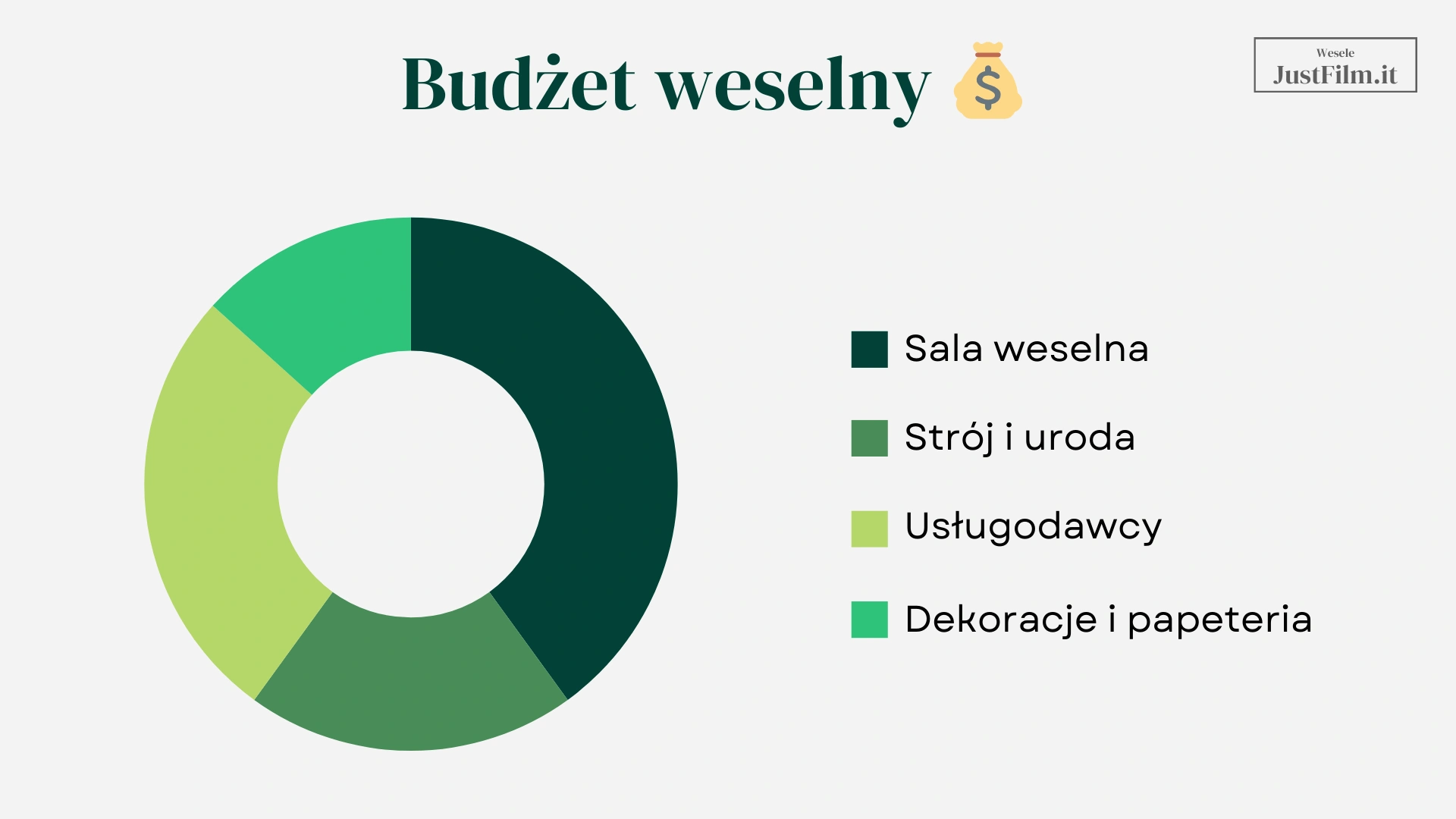
Before you dive into planning and organizing your wedding, we recommend sitting down and working out your wedding budget in detail first. This will help you figure out how big a wedding you can actually afford, and how much you can allocate to each element of the day. Planning your budget before you make your first calls or bookings will save you from the stress of running short on money later in the process, and reduce your risk of financial trouble. On top of that, having a clear budget makes it much easier to know what price range to look for when comparing venues and vendors, which will save you a lot of hassle down the road.
We bring this up because we’ve seen couples who assumed their wedding would pay for itself through cash gifts from guests, only to end up taking out a loan to cover what they owed vendors. It’s far better to consciously plan a smaller wedding than to risk running out of money in your budget. If you’d like to dig deeper into planning a wedding budget, check out our detailed article: How much does it cost to organize a wedding? Get your wedding budget sorted!
What to think about before you start planning
Before you start browsing venues, it’s worth thinking through a few key questions that matter even before you book your first vendor. Think of these as the foundational facts about your future wedding that you need to nail down early on - they’ll shape every choice you make about specific venues and vendors from here on out.
1. What type of ceremony are you planning
First, decide what kind of ceremony you want - a church wedding or a civil one. This decision affects how you book your exact wedding date: for a church wedding, you’ll be working around a specific parish’s calendar, while a civil ceremony depends on available slots at the registry office (USC). You’ll also want to think about the overall scale of your reception - are you picturing a big wedding, or more of an intimate dinner with your closest family and friends.
2. A rough idea of your wedding date
Next up is settling on an approximate wedding date. It’s best to stay flexible here - pick a range of dates, like an entire month, rather than one single day. That makes it much easier to find an open date at the venue you love most. Also factor in how much time you’ll need to plan everything; don’t pick a date that’s coming up too soon, or you risk running out of time or missing your chance with the vendors you want.
3. Deciding on a location
Location matters just as much - usually shaped by where you or your partner grew up or currently live. You’ll need to decide which church or registry office to use, and how far from it you’re willing to look for a venue. Keep in mind that your guests will need to get to both the ceremony and then the reception venue afterward. Think about whether you want to arrange transportation for guests, like a shuttle bus, or leave the commute entirely up to them.
4. Putting together a rough guest list
This will feel tricky at first, and the list will almost certainly change many times before the big day, but it’s worth drafting an early version right from the start. It’ll help you estimate roughly how many people you want to invite to your wedding. This is crucial both for choosing a venue and for comparing costs based on price-per-plate - it lets you quickly check whether a venue actually fits within your planned budget.
What does the wedding planning timeline look like
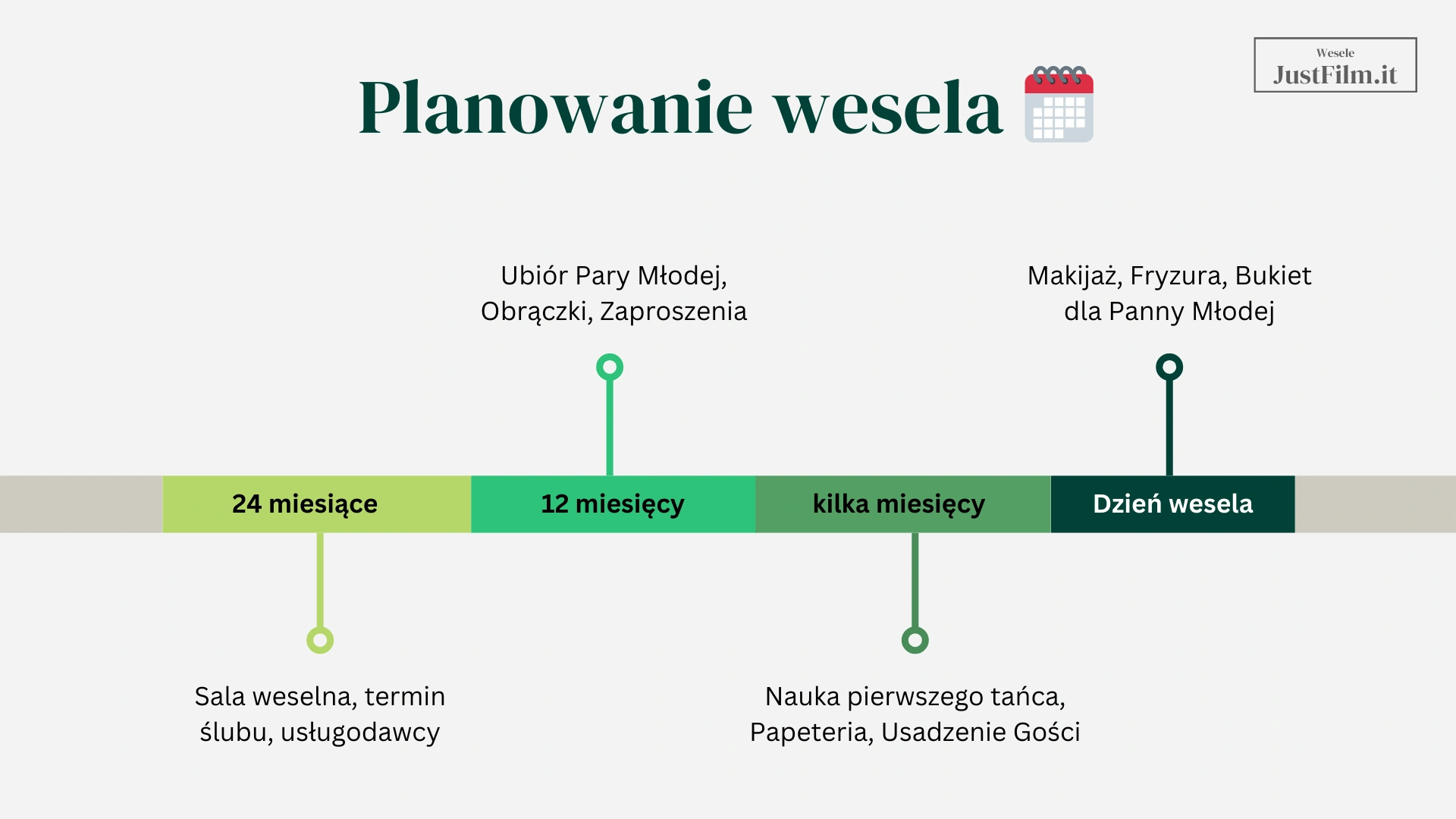
You can break the whole stretch of time between when you start planning and your wedding day into a few distinct phases. A lot of elements of wedding planning depend on each other in some way, so it helps to work through everything in a logical order, so you don’t accidentally skip an important step.
Start with the things that are hardest to book - the ones that need to be reserved the furthest in advance - and anything that’s an absolute must-have for you. Booking your venue is almost always at the top of that list, since it locks in your wedding date, and only then can you start booking other vendors around it. As the months go by, you’ll work through progressively less time-sensitive tasks, until you’re left with the smaller details that can be handled closer to the big day. A useful approach here is to work from general to specific: first confirm a vendor is the right fit and lock in their date, then nail down the finer details and logistics closer to the wedding itself. In the rest of this article, we’ll break down exactly what that planning order looks like, walking through the most important topics step by step.

What to plan first (2 years before the wedding)
Start with the most important things - the ones that need to be booked with the most advance notice. One of the biggest of these is locking in your final wedding date, based on venue availability and open slots at the church or registry office. You’ll also want to book and sign contracts with the vendors whose calendars fill up fastest. Booking this early gives you a much wider pool of available vendors to choose from, so you can pick the ones who suit you best. 2 years (24 months before the wedding) is obviously just a rough guideline - it really depends on when you start planning and how attached you are to specific people or venues, but regardless of how much time you have left, these are the priority topics to tackle first.
💒 Booking your ceremony date (church or registry office)
This is the foundation - your ceremony date at the church or civil ceremony at the registry office. Without it, your wedding simply can’t happen, so make sure to sort this out right at the start. Check which of your ideal dates are still available and pick whichever works best for both the date and the time. Keep in mind this decision is closely tied to choosing your venue too, so it’s worth tackling both at the same time. You might find that a slightly less ideal ceremony date is your only way to snag a booking at your dream venue, so check availability at both places before committing.
🎊 Booking your venue
Put together a list of venues that meet your requirements, then visit a handful of your favorites in person to see how they actually look and check date availability. Consider:
- Location - the biggest factor. The venue should be easy for all your guests to reach; also think about the commute from the ceremony and whether you’ll need to arrange accommodation for loved ones traveling from out of town.
- Look and feel - do you actually love the space? Will it photograph and film well? Does its vibe match what you’re going for, does it look the same in person as it does on the website, and is there enough room for all your guests?
- Price - check the current price per plate along with any additional services, and ask specifically about extra costs and whether prices could change after you sign the contract.
- Reviews - as with any wedding vendor, check what other couples have said about their experience.
- Menu and bar options - make sure you’re happy with the menu and sample dishes, and check whether you like the extras the venue offers (think wedding cake, drinks, desserts, a grazing table, and so on).
- The contract - ask for a sample contract and check it for red flags (some contracts include surcharges for bringing in outside vendors, or clauses allowing price increases tied to inflation). Make sure you’re comfortable with every clause before committing to a venue.
📸 Booking your vendors (band or DJ, photographer, videographer, bartender, decorator)
With your date locked in, it’s time to start looking around for vendors, many of whom also get booked up to 2 years in advance. If you want the widest possible selection to choose from, it’s worth starting this process as soon as possible after booking your venue. That gives you the best shot at finding people whose style, communication, and pricing are exactly the right fit. Pay special attention to: your band or DJ, photographer, videographer, bartender, and decorator.
🥰 Choosing your witnesses
This is a meaningful decision, since your best man and maid of honor should be supporting you not just on the wedding day itself, but throughout the entire planning process. That’s why choosing your witnesses is something you’ll want to lock in as early as possible. Think about which of your loved ones is right for this kind of responsibility - someone you trust, who you know will genuinely help you through the whole process. Once you’ve decided, don’t forget to actually ask them if they’re willing to take on the role.
What to plan in the middle of the process (1 year before the wedding)
With the highest-priority tasks handled, it’s time to move on to the next round of more detailed planning. Around 12 months out, you can start thinking about things like your wedding theme, your outfits, stationery, and booking any additional entertainment. Tackling these closer to the wedding has its perks too - there’s less risk that your whole vision will change over two years, and when it comes to clothing, you won’t have to worry about your body shape, size, or style preferences shifting over such a long stretch of time.
✨ Choosing your wedding theme and color palette
Think about the style and theme you want for your wedding. This will make every decision you make afterward - about entertainment, decorations, or stationery - feel more cohesive, so everything ties together nicely. Think about the overall mood you’re going for, and choose a color palette that will show up throughout your venue.
👰 Wedding attire (dress, suit)
Start browsing for your wedding dress and the accessories to go with it. Begin by gathering inspiration (our JustFilm.it Wedding Pinterest is a great place to start) to help you figure out the style you’d love to wear on your big day. Once you’ve settled on a silhouette, visit a few bridal salons to find your perfect dress. We’d also recommend our guide: How to choose a dress for a church or civil wedding. On top of the dress, you’ll still need to pick out shoes, a veil, jewelry, and other accessories.
The groom has a similar process ahead of him - choosing a suit, shoes, and accessories. Exactly how far in advance you need to decide depends on whether you’re going with a custom-made dress or opting for a ready-to-wear piece that just needs some tailoring.
💍 Wedding rings
Choosing your wedding rings is a decision you’ll live with forever, so it’s worth taking your time to make sure you find rings you’ll be genuinely happy with. You’ll need to decide on style, material, and size - it’s worth visiting a few jewelers to see how different options look in person and figure out which ones you love most.
💄 Book your remaining vendors (makeup artist, hairstylist)
Beyond your booking for the wedding day itself, it’s worth scheduling a trial run for your hair and makeup too. Do this with plenty of lead time - if you’re not fully happy with the results, you’ll still have room to look for other stylists. Also think carefully about scheduling, especially if you’re getting these services done in different locations - make sure you can comfortably get from one appointment to the next without rushing.
✉️ Wedding stationery and invitations
Ordering your stationery - invitations, signage, place cards, table plans - also needs to be planned ahead of time. Browse available designs and reviews, and pick something that matches your wedding’s theme and style. It’s worth splitting this into at least two rounds: not everyone you invite will actually be able to attend, so it’s smart to hold off on printing place cards until you have a clearer headcount. If you print your place cards and invitations too early, you risk your guest list shifting in the meantime. When you place your order, it’s worth asking for a few blank pieces in the same design that you can fill in by hand later if needed. This is also around the time you should start thinking about sending out invitations and setting an RSVP deadline.
💡 Plan any extra wedding entertainment
Beyond your core vendors like a photographer or videographer, many couples also add extra entertainment to their day. This is a good time to think about what kind of activities you’d like at your wedding and book them while there’s still availability. Think along the lines of an ice cream cart, a handmade pizza station, or a guest book. For more ideas, check out our article: Wedding attractions - 23 cheap and fun ideas.
🍾 Bachelorette and bachelor parties
In most cases, your maid of honor and best man will take the lead on organizing these, but it’s worth clearly agreeing with them who’s in charge of what, so there’s no confusion later on. Also settle on a date for the bachelorette and bachelor parties with them - ideally not too close to the wedding itself. That way, if anything unexpected happens, there’s still time to recover before the big day. 😅
What to plan in the final months before the wedding
You’re in the home stretch now, where you’ll finalize everything from your schedule to your guest list, and take care of smaller details, like gifts for your guests or a wedding-day emergency kit. These final items are best handled in the last couple of months before the wedding, once you’re confident nothing major is still up in the air.
🗓️ Your wedding day schedule
With the wedding fast approaching, it’s time to lock in your final day-of schedule. Meet with all your vendors to confirm the finer details and the hours they’ll need to be on-site. Coordinate with your venue on the timing for serving meals and other elements, like the cake or a grazing table. Make sure your band or DJ especially gets a copy of the schedule, since they’ll be running the show and keeping guests updated on what’s coming next. Also, double-check that your ZAIKS fee is settled - your band should typically handle this, but that’s not always the case. Check out our detailed guide: how to pay ZAIKS for your wedding, step by step.
📜 Your final guest list and seating chart
Once your guests have confirmed their attendance, you’ll have a fairly final guest list (though it will almost certainly shift a little more even on the day itself - don’t worry, that’s totally normal). This is a great time to plan out your seating chart and print your venue and table layouts. If you split your stationery printing into two rounds, this is also the time to print your place cards.
💃 First dance lessons
There’s no need to rush into dance lessons - if you start too early and don’t keep practicing regularly, you might forget the choreography and lose some of your polish by the big day. Two to three months out is the sweet spot for tackling this. Find a dance instructor, work out your choreography, and get ready to shine during your first dance.
🎁 Gifts for your guests
If you’d like to give your guests a small token of appreciation, now’s a good time to put together thank-you gifts for attending your wedding. It’s a small gesture, but one your guests will genuinely appreciate. Check out our ideas here: 34 wedding favor ideas for guests.
🧺 Wedding-day emergency kit
Right before the wedding, it’s also worth putting together an emergency kit - a collection of handy items your guests might need during the celebration. These are usually placed in the restrooms for privacy, and typically include things like band-aids, tissues, hair gel, deodorant, and gum. On our blog, you can grab a free shopping list to build your own wedding emergency kit: How to build a wedding emergency kit - downloadable checklist.

How to plan a stress-free wedding day
A realistic schedule for the day itself is key - write down everything you need to get done on your wedding day. Having it all on paper takes away the mental load of trying to remember what’s next (and lets you cross things off as you go, so nothing slips through the cracks). If there are tasks you can knock out earlier, say 2-3 days before the wedding, definitely do that - the less you have to think about on the actual day, the less stressed you’ll feel.
Your schedule should allow a realistic amount of time for each stage, factor in travel time, and always build in a buffer for anything unexpected. It’s worth delegating some tasks to your witnesses so you’re not handling everything solo (you’ll already have plenty on your plate that day as it is). It might sound obvious, but your mindset that day matters just as much - enjoy it, and don’t stress if everything isn’t 100% perfect. With a project this big, something is bound to look slightly different than you pictured, but the worst thing you can do is fixate on small details and let them steal your joy from a truly special day.
What to think about after the wedding
There are also a few things worth remembering after the wedding is over - mostly formalities tied to a name change:
- Updating your ID card
- Updating your driver’s license
- Updating your passport
- Updating your details with banks, service providers, and any contracts once your documents are changed
After the wedding, you might also want to think about a honeymoon, which is always a lovely way to round off the whole celebration. After months of preparation, it’ll finally be time to relax and unwind - both from the planning itself, and from all the stress that comes with it. Plenty of couples actually plan their honeymoon well before the wedding, so they can head off just a few days after saying “I do.”
Download our wedding planning checklist
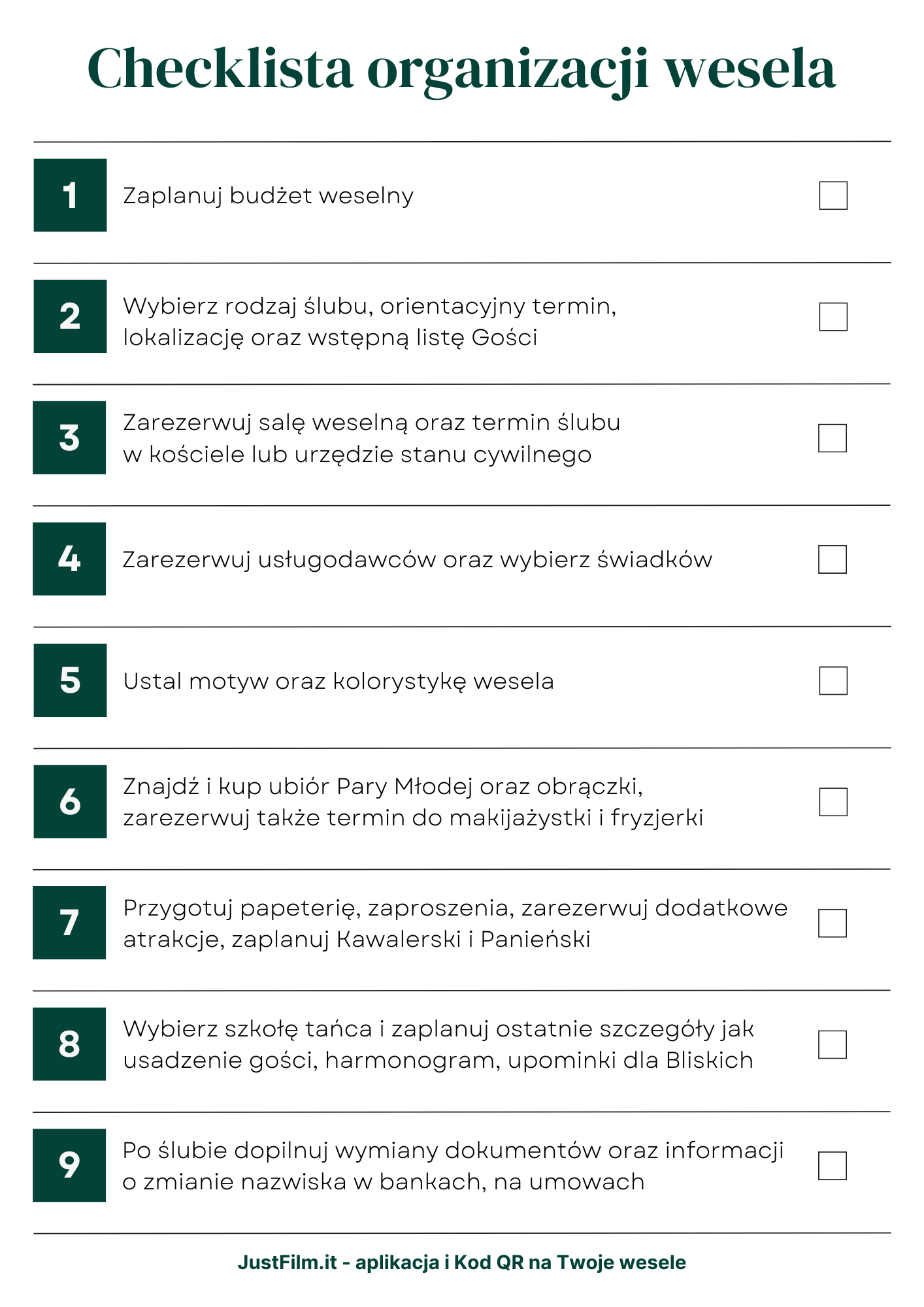
We know firsthand that planning a wedding is a genuinely complicated, time-consuming process! That’s why we put together a checklist that walks you through the most important tasks involved in planning your wedding and reception, step by step. We’ve arranged every task in a sensible order, taking you from the biggest priorities down to the smaller details, so you can keep the whole process organized and always know exactly where you stand. You can download our free wedding planning and organization checklist below:
Click here to download our wedding planning checklist (PDF)
Najczęściej zadawane pytania
Where should you start planning a wedding?
When should you start planning a wedding?
What should you book first when planning a wedding?
Is it worth hiring a wedding planner?
How do you plan a wedding without the stress?
JustFilm.it wedding app
Collect the photos and videos your loved ones capture on their phones throughout your wedding, and turn them into a unique keepsake - both an online gallery and a highlight video! We’ll start by preparing personalized poster graphics with a QR code and instructions, matched to your venue. At any point during the wedding, or even after guests get home, they can scan the QR code and easily upload hundreds of their souvenir photos and videos. You and your loved ones will be able to browse everything collected live, in a beautiful online gallery, even during the wedding itself. Want to learn more? Visit our page about the app: JustFilm.it wedding QR code.
For readers of our blog we have a special discount on our app! Write us a message on social media or to the address [email protected] with the date of your wedding and the code BLOG10, and we will check if this date is still available and if so you will be able to buy access with a discount.